|
|
|
Amigos w/ Common Interests
|
|
|
|
|
|
|
|
|
|
|
|
|
|
|
|
|
|
<<
View Prev Image
|
|
|
|
View Next Image >>
|
|
|
|
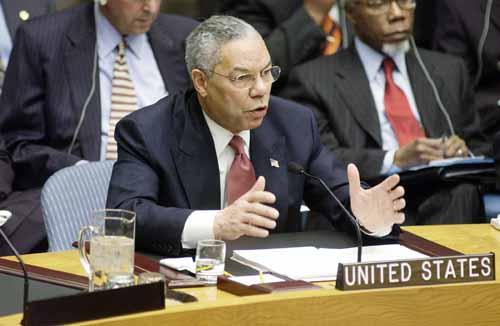
Powell Calls U.N. Speech a 'Blot' on His Record
Former Secretary of State Speaks Out on Being Loyal -
- and Being Wrong
ABC News
In 35 years of service as a soldier, Colin Powell earned a reputation as the quintessential disciplined warrior. As secretary of state in President Bush's first term, Powell was widely seen as a disciplined, moderate -- and loyal -- voice for the administration.
Now out of government service, Powell is airing openly his disappointments and frustration on everything from the invasion of Iraq to the federal response to Hurricane Katrina.
Powell, 68, who recently visited storm survivors at Reunion Arena in Dallas, said he was "deeply moved" by the families displaced by the devastating storm and was critical of the preparations for Hurricane Katrina. "I think there have been a lot of failures at a lot of levels -- local, state and federal. There was more than enough warning over time about the dangers to New Orleans. Not enough was done. I don't think advantage was taken of the time that was available to us, and I just don't know why," Powell told ABC News's Barbara Walters in an interview to air Friday.
Powell doesn't think race was a factor in the slow delivery of relief to the hurricane victims as some have suggested. "I don't think it's racism, I think it's economic.
"When you look at those who weren't able to get out, it should have been a blinding flash of the obvious to everybody that when you order a mandatory evacuation, you can't expect everybody to evacuate on their own. These are people who don't have credit cards; only one in 10 families at that economic level in New Orleans have a car. So it wasn't a racial thing -- but poverty disproportionately affects African-Americans in this country. And it happened because they were poor," he said.
When Powell left the Bush administration in January 2005, he was widely seen as having been at odds with Defense Secretary Donald Rumsfeld and Vice President Dick Cheney over foreign policy choices.
It was Powell who told the United Nations and the world that Saddam Hussein had weapons of mass destruction and posed an imminent threat. He said that he feels "terrible" about the claims he made in that now-infamous address -- assertions that later proved to be false.
When asked if he feels it has tarnished his reputation, he said, "Of course it will. It's a blot. I'm the one who presented it on behalf of the United States to the world, and [it] will always be a part of my record. It was painful. It's painful now."
He doesn't blame former CIA Director George Tenet for the misleading information he says he pored over for days before delivering his speech; he faults the intelligence system.
"George Tenet did not sit there for five days with me misleading me. He believed what he was giving to me was accurate. … The intelligence system did not work well," he said.
Nonetheless, Powell said, some lower-level personnel in the intelligence community failed him and the country. "There were some people in the intelligence community who knew at that time that some of these sources were not good, and shouldn't be relied upon, and they didn't speak up. That devastated me," he said.
While Powell ultimately supported the president's decision to invade Iraq, he acknowledges that he was hesitant about waging war. "I'm always a reluctant warrior. And I don't resent the term, I admire the term, but when the president decided that it was not tolerable for this regime to remain in violation of all these U.N. resolutions, I'm right there with him with the use of force," he said. "Loyalty is a trait that I value, and yes, I am loyal. And there are some who say, 'Well, you shouldn't have supported it. You should have resigned.' But I'm glad that Saddam Hussein is gone. I'm glad that that regime is gone," he said.
When pressed about that support, given the "mess" that the invasion has yielded, Powell said, "Who knew what the whole mess was going to be like?"
While he said he is glad that Saddam's regime was toppled, Powell acknowledged that he has seen no evidence of a link between Saddam Hussein and the 9/11 terrorist attack. "I have never seen a connection. ... I can't think otherwise because I'd never seen evidence to suggest there was one."
Despite his differences with the administration, Powell said he never considered resigning in protest. "I'm not a quitter. And it wasn't a moral issue, or an act of a failure of an active leadership. It was knowing what we were heading into, and when the going got rough, you don't walk out."
When asked what steps he would take in Iraq, Powell said, "I think there is little choice but to keep investing in the Iraqi armed forces, and to do everything we can to increase their size and their capability and their strength," he said.
continued in comments below . . . |
|
|
|
|
|
| |
|
|
|
|
|
My Favorites
|

 tomswift46
Apr 06, 2008
Tenafly, NJ
|

 siamakjafari
Apr 01, 2008
tehran, Iran, Islamic Republic Of
|

shakeh

Mar 31, 2008
tehran, Iran, Islamic Republic Of
|

tomswift46
Mar 31, 2008
Tenafly, NJ
|
More Favorites >>
|
|